Showing posts with label non-standard usage of flowers. Show all posts

31 August 2013

Treasures of Summer

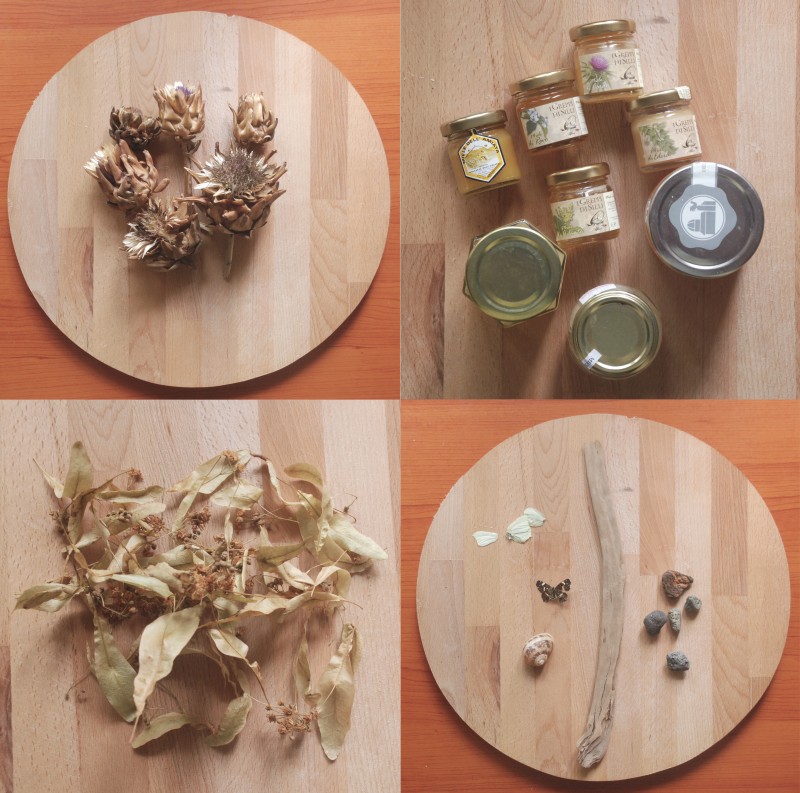
1. dried flowers 2. honey 3. Tilia (I dried some more herbs too!) 4. butteflies, stones, shells, driftwood


As I said in this post I've been collecting things that nature somehow left on my way during Summer. I'm going to turn them into something pretty, useful or pretty and useful;) Honey is the only exception, it just kind of turned into my new hobby. I try to recognize new tastes as I bought six new while I was in Tuscany.
I wonder if you guess what are my ideas! Tell me, what do you think?

Tak jak powiedziałam w tym pości, przez lato zbierałam rzeczy, które natura zostawiała na mojej drodze. Mam zamiar zamienić je w coś ładnego, przydatnego, albo ładnego i przydatnego;) Tylko miód jest wyjątkiem w tym zestawieniu, dodawanie nowych smaków do kolekcji stało się moim hobby. Staram się nauczyć rozpoznawać rodzaje, będąc w Toskanii kupiłam sześć nowych gatunków! 
Zastanawiam się, czy zgadniecie, jakie mam pomysły. Jak myślicie?

Have a beautiful day,
Julia

30 June 2013

Natural dye: poppy (DIY)

It's poppy time! Last year I made natural ink out of flower petals, thi Summer I wanted to make something different. So if you ever wanted to try natural dye, now it's your turn. It's really easy!


First you need to pick some poppies, only the petals. Put it to a pot and boil with water on low heat (1 volume of poppies per 2 volumes of water) for one hour or longer. In another pot boil a piece of fabric you want to dye in a solution of vinegar 1:4 to water. After that time separate the petals (they should be sheer), rinse the fabric in cold water and put into the pot with poppy dye. Leave it until you're satisfied with the colour you got (remember it will be slightly lighter!).
Here you have it! You need only three ingredients in the whole process!
Note: If your fabric is cotton I reccomend using different fixative.


I also attempted to make an ombre lace. I dipped only the end of folded lace in the liquid and the colour went up with the fibres! Honestly, it turned out even better that the dress.


How do you like the result? Do you plan similar experiments for the summer?

*
Wiem, ze miałam prowadzić bloga też po Polsku, ale szczerze mówiąc nie sądzę, żeby tłumaczenie wszystkiego było konieczne. Staram się używać prostego angielskiego (z resztą taki znam;)). Gdyby coś było niejasne, odpowiem na wszystkie pytania! 
Macie zamiar eksperymentować z naturalnymi barwnikami? A może już coś robiłyście i macie jakieś porady dla mnie?;)

Have a beautiful day,
Julia

25 September 2012

Lavender in the kitchen: lavender syrup + ice-cream

Hello friends, did you notice it's lavender season again?! As I made lavender sachets last time, this time I decided to make something entirely different. Have you ever used lavender in the kitchen? If not, you should try it for sure. This is the last time to do it this year, so don't wait!

For the lavender syrup you'll need: 1/2-1* cup of fresh lavender flowers, 1 tablespoon of lemon juice, 2 cups of water, 1-3/2 cup of sugar* (*-depending on your taste). Pour lavender into a pan with hot water, leave until it's cold. Then add sugar and boil together until the mixture is combined well. At the end add lemon juice (the syrup will change colour from grey/lavender to the one you see in the pictures). Sieve the lavender - you need to have a clear syrup. Done!

If you want to make lavender ice-cream, replace the sugar with the lavender syrup in your favourite basic ice-cream recipe. My ice-cream contained some homemade vanilla extract too (worth recommendation! I'll probably share the recipe soon). The ice-cream taste the best with a piece of apple pie or baked apples. Notabene, Szymon made the prettiest baked apple for me, it looks like my kitty! Timon (this is finally his name, probably) approves!

By the way, he's falling asleep on my legs right now.
Have a beautiful day,
Julia

19 September 2012

Best method of pressing flowers

The summer is almost over. Many of you would probably like it to stay for longer, but unfortunately it's impossible. I'll for sure miss flowers in bloom in winter. The only method to keep them for longer is pressing them. Just in case someone else want to do the same what I do to remember about summer days, I share a few quick tips I use while pressing flowers that have benn kind of my secret.

1. The bigger pressure the better - it's obvious, isn't it. If you don't use at least a few encyclopedias flowers can contract or become wavy. Olny by applying enough pressure will you get good results. I strongly recommend using a press, not encyclopedia - it doesn't take much space and what's more you can regulate the pressure.
2. The longer the better. It takes some time for flowers to get completely dry. For the thinest two weeks might be enough, other need one or two months. The main rule is that it's never too long.

3. Use absorbent paper to separate flowers - they will get dry quicker. If you have some time you can make your own paper using my method, these sheets absorb water like a sponge!


4. Segregate flowers by thickness. Lay thin flowers on one sheet of paper, thicker and the thickest on the other two. Usually thickness is a fearute of every species, so you can easily segregate by species. For example, poppies should get a separate sheet and all kinds of pansies can be pressed together. In the press you can preserve big variety of blossoms by making 'layers' of flowers and paper. 

In the first picture and those below you can see the final result.


You can use the same methods to preserve autumn leaves, but come on - autumn starts in October. We still should enjoy summer in the last days of September.

Have a beautiful day,
Julia

26 August 2012

natural ink - made using flower petals

Hello! Today I'd like to share another experiment I carried out, making natural ink!
I've read about natural dyeing in an old book about properties of herbs and wanted to try with poppies, but foud very few. It was after poppy season. As I had only a handful of the most important ingredient I had to do something different and found the solution in the same book!
Instruction: put flower petals into a glass and cover it with warm water. Leave for a few hours (I leaved mine for a night).
After this time separate the liquid. (You can boil it for a while to get stronger colour - optional.) Add strong alcohol in proportions 1 dose of alc:4 dozes of extract.
Ink is ready to use!


I made three inks - out of poppy, kingcup and blue sweet pea. At the beginning all three colours were strong, but after a week blue ink looked like faded. You can see how each colour looks straight after making below. Poppy ink has exactly the poppy colour, lovely!

To sum up, natural inks are worth making. If you like flowers because of their variety of colours you should try this for sure. 

Have a beautiful day,
Julia 

EDIT: A lot of people visit this post and I got asked in the comments about flowers that can be used etc. HERE is a long list you can use for natural dye or making this ink. These flowers are used in dying fabrics, so the colour shouldn't fade or so on. Now, almost a year after making my inks, I still have one of them (yellow), and the colour is as strong as it was at the beginning.